Hijab Color Theory: Which Hijab Colors Suit Your Skin Tone
The hijab colors that suit you best depend on your skin's undertone, not on how light or dark your skin is. Warm undertones look best in earth tones like cream, olive, mustard and rust. Cool undertones suit crisp shades like white, navy, emerald and berry. Neutral undertones can wear most colors, with blush pink, teal and true red as easy picks.
Have you ever done your makeup, put on a hijab you love, and then looked in the mirror and thought — I look tired? Or worn a color you were sure wouldn't suit you, and found it lit up your whole face?
That isn't luck. It's color theory.
A hijab sits directly against your face, closer than any other piece you wear. Get the tone right and it evens out your complexion and brightens your eyes with almost no makeup. Get it wrong and it flattens everything.
This guide shows you how to find your undertone and build a hijab palette that works with your skin rather than against it.
Step 1: Find Your Undertone
Before you shop, work out whether you are warm, cool or neutral. This has nothing to do with how light or dark your skin is — two people with the same depth of skin can have opposite undertones.
The vein test
Look at the veins on the inside of your wrist in natural daylight.

- Green veins — warm undertone
- Blue or purple veins — cool undertone
- A mix, or genuinely hard to tell — neutral undertone. Most people who can't decide fall here.
The jewelry test
- Gold suits you better → likely warm
- Silver suits you better → likely cool
- Both look fine → likely neutral
The paper test
Hold a sheet of white paper next to your face in daylight. If your skin reads yellow or golden against it, you're warm. If it reads pink or blue, you're cool. If neither is obvious, you're neutral.
Step 2: Hijab Colors for Warm Undertones
Green veins, gold jewelry. Your skin has yellow and peach in it, so earth tones will enhance that warmth rather than fight it.

Your colors
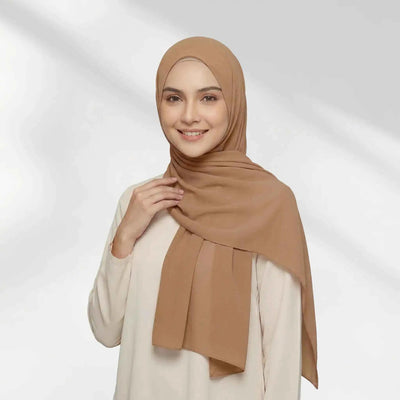
- Neutrals: cream, beige, taupe, warm tan
- Accents: olive green, mustard, rust, terracotta, warm red
- Metals: gold, bronze, copper
What to avoid
- Pure white. A bright, cold white washes out warm skin. An off-white or ivory does the same job without the glare.
- Icy pastels. Baby blue and frosty silver can leave warm skin looking gray.
Warm tones in our range: beige, brown, gold and olive green.
Step 3: Hijab Colors for Cool Undertones
Blue veins, silver jewelry. Your skin has pink, red or blue in it, and it responds to contrast — clean, crisp shades rather than muted ones.

Your colors
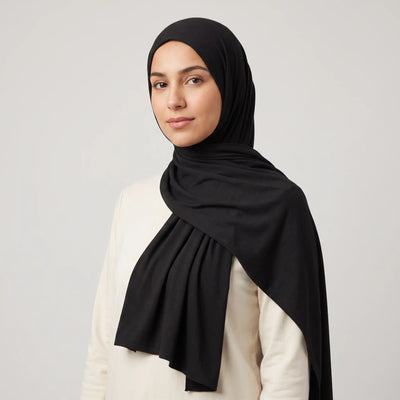
- Neutrals: white, black, gray, charcoal, navy
- Accents: royal blue, emerald, berry, magenta, lilac, lavender
- Metals: silver, platinum, white gold
What to avoid
- Orange and yellow. They sit opposite the pink in your skin and can bring out redness.
- Yellow-based beige. Warm beiges are tricky on cool skin. A pink-based neutral — dusty rose — works far better.
Cool tones in our range: black, navy and powder blue, berry red and dusty rose.
Step 4: Hijab Colors for Neutral Undertones
Mixed veins, both metals suit you. Neutral undertones sit between warm and cool, which means almost the whole wheel is open to you.
Your colors
- Universal shades: blush pink, jade green, teal, true red
- Neutrals: both warm beige and cool dusty pink work — you can wear either
What to avoid
Very little. Neon shades are the main thing worth caution with — they can overpower the balance that makes neutral undertones so flexible.
Step 5: Finding Your Neutral Hijab
Every hijab collection needs a skin-tone neutral to fall back on. But that neutral is a spectrum, not a single color — the right one depends on your skin depth, not just your undertone.

- Fair skin: a neutral hijab with a hint of pink — blush or shell. Avoid yellow-based beige, which reads sallow.
- Medium and tan skin: caramel or toffee. Avoid any neutral lighter than your own skin — that's what washes people out.
- Deep skin: chocolate, espresso and mocha. Avoid ashy gray or pale beige, which clash rather than blend.
Our beige range covers the lighter end and brown covers the deeper end.
Step 6: Matching or Contrasting
Once you have your palette, there are two ways to build the outfit.
Tonal (matching)
Wear the hijab in a shade close to the rest of the outfit — a rust dress with a terracotta hijab, or black on black.
The effect: elongating, quiet, considered. This is the safer everyday choice.
Contrast
Pair opposites — navy with gold, black with blush.
The effect: bold and eye-catching, and it draws attention upward to your face.
Hijab Outfit Ideas by Color
Once you know your palette, these pairings make it easy to build an outfit around the hijab.
- Black hijab style: the easiest base. A black hijab outfit works with denim, camel and white for daytime, or all black for a sleek evening look. Shop black.
- Beige hijab style: soft and easy to pair. A beige hijab outfit pairs well with cream, olive and brown, and keeps work looks calm. Shop beige.
- Brown hijab style: warm and grounded. A brown hijab outfit looks rich with rust, cream or denim. Shop brown.
- Pink and dusty rose hijab style: a dusty rose hijab outfit works with gray, navy and white, and a pink hijab style softens a dark coat. Shop pink.
- Purple hijab outfit ideas: pair purple with gray, black or cream, and keep the rest of the outfit simple. Shop purple.
- Sage and olive green hijab outfit: earthy greens match beige, brown, white and denim. Shop green.
- Navy blue hijab outfit: navy reads polished with white, camel or gold accents. Shop blue.
- Watercolor hijab: a soft watercolor print pulls several shades together, so wear it with a plain outfit in one of its colors.
Hijab Color Meaning
There is no required hijab color, and colors do not carry a fixed meaning. What people usually mean by hijab color meaning is the mood a shade creates. The black hijab meaning most people read is classic, formal and always in style. The red hijab meaning is bold and celebratory, which is why it is popular for Eid and parties; see red. Neutrals feel calm and professional, pastels feel soft, and gold reads festive; see gold. Choose the mood you want for the day.
Final Thoughts
Finding your palette takes some trial and error. The quickest test is still the simplest: hold the fabric up to your face in natural light and ask whether it lifts you or flattens you.
And treat all of this as guidance rather than rules. If you love a color that sits outside your undertone, wear it — confidence reads louder than color theory.
To put these colors into real looks, see our hijab outfits for work, events and weekends, and our chart on what color hijab to wear with each dress.
Ready to find your shade? Browse the full range of hijab colors, or start with black — the one shade that works on everyone.