Turkish Hijab Style: 4 Easy Wraps and How to Do Them
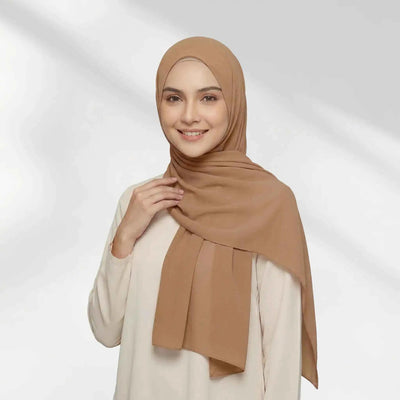
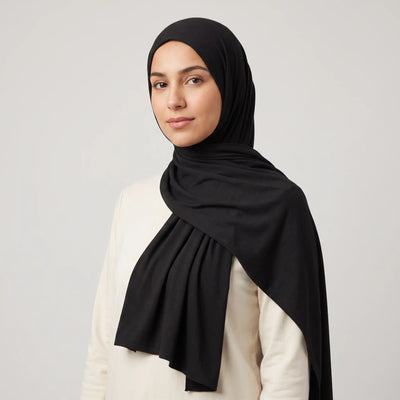
A Turkish hijab style is a neat, face-framing wrap with soft volume at the crown, pinned close under the chin and finished with layered drapes over the chest. It is traditionally made with a large square scarf folded into a triangle, but you can get the same Turkish style hijab look with a long rectangular scarf and a fitted hijab cap.
Key Takeaways
- A Turkish hijab style frames the face closely, lifts the crown and layers fabric over the chest.
- Square scarves give the classic triangle fold; rectangular scarves give longer, softer drapes.
- Most Turkish wraps need only 1 to 3 pins: one under the chin and one at the crown or side.
- A fitted hijab cap gives the wrap a smooth base and covers the front hairline.
- Chiffon gives the most volume, modal the softest drape, and jersey is the easiest fabric to learn on.
What is a Turkish hijab style?
A Turkish hijab style is a way of wrapping a scarf so it sits snugly around the face, rises softly at the back of the head and falls in neat layers over the chest and shoulders. The look is tidy and structured rather than loose and flowing.
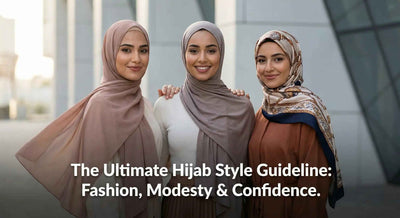
In Turkey, two scarf shapes are part of everyday dressing: the square scarf, often called an eşarp, and the long rectangular shawl, called a şal. Both are worn in many ways, so "Turkish hijab" describes a family of looks, not one fixed wrap. What they share is easy to spot:
- A smooth, even edge across the forehead
- Gentle volume at the crown, usually from a bun under the hijab cap
- Fabric pinned close under the chin, so the jaw is framed and the neck is covered
- Ends layered over one or both shoulders for full chest coverage
That last point is what separates it from a turban hijab, which wraps around the head and leaves the neck open. It also differs from the loose shayla drape common in Gulf countries, where a long scarf hangs freely over the shoulders with little pinning. How a woman wears her scarf is a personal choice, and many hijabis switch between these looks depending on the day.
Square vs rectangular scarf: which works better for a Turkish hijab?
A square scarf gives the classic Turkish hijab, with its crisp triangle fold and tidy chin line. A rectangular scarf gives the modern, drapey versions with one long end over the shoulder. Both work; the right choice depends on the look you want and the scarves you already own.
A Turkish square hijab is usually somewhere around 43 to 51 inches on each side. Rectangular scarves are longer and narrower. Our modal, jersey and chiffon hijabs are rectangles that measure 70.9 × 27.6 inches (180 × 70 cm), so each set of steps below includes a rectangle version.
| What matters | Square scarf | Rectangular scarf |
|---|---|---|
| How you fold it | Diagonally into a triangle | Used flat, or folded lengthwise for a thicker edge |
| Finished look | Crisp, symmetrical, classic | Softer, longer drapes, often one-sided |
| Chest coverage | Good, from the triangle point and side ends | Full chest length from the long end |
| Best Turkish styles | Classic wrap, cross-back style | Side-draped wrap, high-crown wrap, classic wrap |
| Learning curve | Easy once the fold is right | Easy; more fabric to arrange |
The 4 easiest Turkish hijab styles, step by step
These four wraps cover the looks people search for most, from a quick everyday wrap to a fuller event style. Put on your hijab cap first for all of them. If you are new to wrapping, practice our basic guide on how to put on a hijab once, then come back to these.
1. Classic Turkish wrap
This is the everyday Turkish hijab: framed face, pinned chin, ends layered over the chest.
- Tie your hair into a bun at the crown and pull on a fitted hijab cap.
- Square scarf: fold it into a triangle. Rectangle: fold a narrow band (about 1 inch) along one long edge to make a clean front line.
- Place the folded edge across your forehead, just at or slightly over the cap's edge, with one side a little longer than the other.
- Bring both sides under your chin, overlap them snugly and place one pin there.
- Take the longer side, carry it across the front of your neck and up over the opposite side of your head.
- Pin it near the crown or above the ear, then smooth the layers so the chest is evenly covered.
2. Side-draped Turkish shawl wrap
This rectangle-first style is the soft, modern Turkish look, with one long panel falling over the shoulder.
- Center the rectangular scarf on your head with one end much longer than the other, about two-thirds to one-third.
- Pin both sides together under the chin.
- Leave the short end hanging down the front of your chest.
- Bring the long end across the front of your neck, around the back of your head and over the opposite shoulder.
- Pin it lightly at the side of the head, then let the rest drape over the chest and shoulder in loose folds.
3. Cross-back Turkish style
This neat style crosses the ends at the back of the neck and brings them forward, so the front looks clean and the chest is covered.
- Place the scarf on your head with both ends even, and pin under the chin.
- Take both ends behind your neck and cross them at the nape.
- Bring each end forward over the opposite shoulder.
- Arrange both ends flat over the chest, one layered on the other.
- Add a small pin at the shoulder if you want the layers to sit flatter.
4. High-crown voluminous wrap
This is the fuller, dressier Turkish hijab style you often see at weddings and Eid.
- Make a higher, rounder bun (or use a hair clip) before you put on the hijab cap, so the crown has lift.
- Drape the scarf over your head with the front edge set slightly back from the forehead line of the cap.
- Pin under the chin.
- Wrap the long end once around the head over the crown to build volume, then pin at the back or side.
- Let the remaining fabric fall over the chest, and loosen the top layer with your fingers for a soft, full shape.
| Style | Best scarf | Pins | Best Wazi fabric | Best for | Difficulty |
|---|---|---|---|---|---|
| Classic Turkish wrap | Square or rectangle | 2 | Modal or jersey | Work, school, daily wear | Easy |
| Side-draped shawl wrap | Rectangle | 1 to 2 | Modal or chiffon | Weekends, dinners, travel | Easy |
| Cross-back style | Square or folded rectangle | 1 to 2 | Jersey or modal | Busy days, commuting | Easy |
| High-crown voluminous wrap | Rectangle | 2 to 3 | Chiffon | Weddings, Eid, events | Medium |
Which Turkish hijab style suits your face shape?
An oval face suits almost every Turkish hijab style, while round, square, heart and long faces look best when the wrap adds height or softness exactly where the face needs balance.
- Oval face: the high-crown wrap and the side-draped wrap both work. A Turkish hijab style for an oval face can keep the front edge slightly higher on the forehead without looking unbalanced.
- Round face: add height with the high-crown wrap and keep the sides close to the cheeks. Avoid extra fullness at the jaw.
- Square face: the side-draped wrap softens a strong jawline with diagonal folds.
- Heart face: the classic wrap with a little fullness under the chin balances a wider forehead.
- Long face: keep the crown lower and let the side layers sit a bit wider.
For more detail on each shape, see our guide to hijab styles for round faces and other face shapes.
What is the best fabric for a Turkish hijab style?
Chiffon is the best fabric for a voluminous Turkish hijab, modal is the best for soft everyday drapes, and jersey is the easiest for beginners because its stretch makes folds simple to set.
| Fabric | What it feels like | Volume | Good for | Good to know |
|---|---|---|---|---|
| Chiffon (100% polyester) | Very light and airy | Most | High-crown wrap, events, spring and summer | Slightly sheer, so wear it over a hijab cap |
| Modal (100% modal) | Soft, smooth, lightweight | Medium | Classic and side-draped wraps, all year | Drapes in fluid folds, easy to layer |
| Jersey (cotton jersey with spandex) | Soft and stretchy | Low to medium | Classic and cross-back wraps, school, fall and winter | Fully opaque, with a natural grip that makes it easy to learn on |
Our modal, jersey and chiffon hijab sets each come with a free hijab cap. The black cap is an exact color match; other colors come with a cap in a coordinating shade. Printed modal hijabs, instant hijabs and our rhinestone and pearl chiffon hijabs are sold as the scarf only.
Do you need a hijab cap under a Turkish hijab?
A hijab cap is strongly recommended for a Turkish hijab style. It covers the front hairline, gives the scarf a smooth surface to sit on and keeps the bun that creates lift at the crown tucked neatly underneath.
A snug tube cap works best because it lies flat under the scarf and leaves no ridge at the back. Our hijab undercap is stretch jersey with spandex, one size, open at the top and bottom, with no back seam and no silicone band. With chiffon, a cap in a matching or close color matters even more, since the fabric is slightly sheer.
How many pins does a Turkish hijab style need?
Most Turkish hijab styles need just 1 to 3 pins. The first always goes under the chin; the second goes at the crown or above the ear, where the long end crosses over; a third at the shoulder is optional for the fuller event styles.
- Use small straight pins with a flat head for the crown and side, so they sit flush.
- Use a safety pin under the chin, where the fabric has more weight to carry.
- Pin through the scarf and the hijab cap together at the crown, never into hair alone.
- If you need more than 3 pins, the folds are usually too loose; rewrap the long end a little tighter instead.
What to wear with a Turkish hijab style
The Turkish look is tidy, so it pairs best with clean, coordinated outfits. Match the scarf to one color in your outfit, or wear it as the single bold color against neutrals.
- Work: a classic wrap in modal, tucked neatly at the chest, with a blazer, a knit top and straight trousers. Navy, black, brown and beige look sharp in an office.
- School and college: a jersey cross-back style is quick to fix between classes and sits flat under a hoodie or a backpack strap.
- Weddings and Eid: a high-crown chiffon wrap with a dressy maxi outfit. For more sparkle, a rhinestone and pearl chiffon scarf can be worn over a hijab cap (the cap is sold separately for that style).
- Winter in the US: tuck the long ends inside your coat collar so the chest is covered under the coat and the layers sit neatly. Jersey and modal lie smoothly under a wool coat or a puffer, and warm tones like brown, olive, burgundy and beige go with most winter coats.
Common Turkish hijab mistakes and quick fixes
- The crown looks flat: move your bun higher before putting on the hijab cap, or add a soft scrunchie around the bun.
- Fabric bunches under the chin: pull the inner layer smooth before pinning, and overlap the sides rather than twisting them.
- The forehead edge is uneven: set the cap straight first, then fold a narrow, even band along the scarf's front edge.
- The chest is not fully covered: use a rectangle and lengthen the long side, or spread the layers wider before pinning at the side.
- Chiffon shows the cap edge or hair: choose a cap in the same color family, or wear the chiffon with a slight double fold at the front.
- The folds keep loosening: rewrap the long end a little tighter and re-pin at the crown. Jersey's natural grip makes the folds easier to set while you are learning.
Where to buy scarves for a Turkish hijab style in the USA
Before you buy a scarf for a Turkish hijab style, check five things on the product page: the exact size, the fabric content, a note on how sheer it is, whether a hijab cap is included, and the return window.
Shop the look: the modal, jersey and chiffon scarves in our hijab set collection measure 70.9 × 27.6 inches, long enough for all four wraps above, and each comes with a free hijab cap. Wazi Empire ships from Atlantic City, New Jersey, with free US shipping on orders over $35, delivery in 5–7 business days and 30-day free returns.
A Turkish hijab style comes down to three things: a smooth hijab cap base, one pin under the chin and neat layers over the chest. Start with the classic wrap in jersey or modal, then try the side-draped and high-crown versions once the folds feel natural. For more wraps beyond the Turkish look, browse these different hijab styles, or start with a soft modal hijab for everyday wear.